Redesigning a website is often seen as a visual upgrade. In reality, it is a high-impact process that can directly affect your search visibility, user experience, and conversion performance.
A well-planned one, however, can strengthen your SEO performance, improve engagement, and support long-term growth.
This guide outlines a structured website redesign roadmap to help you relaunch confidently while protecting your existing traffic and authority.
When to Consider a Website Redesign?
A website redesign should never be driven by aesthetics alone. It should be based on clear performance signals that your current site is no longer supporting business goals.
Common indicators include declining organic traffic, high bounce rates, outdated branding, poor mobile responsiveness, and weak conversion rates.
In many cases, the issue is not just design, but how the site is structured, how content is presented, and how users navigate through it.
Before committing to a full redesign, it is important to assess whether:
- Incremental improvements can solve the issue
- Or a complete website relaunch is required
A redesign is a strategic decision, not just a visual refresh.
Conducting a Pre-Redesign Audit for SEO, UX, and Performance
A website redesign audit is one of the most critical steps in protecting your existing performance.
Without it, businesses risk losing valuable SEO equity built over time.
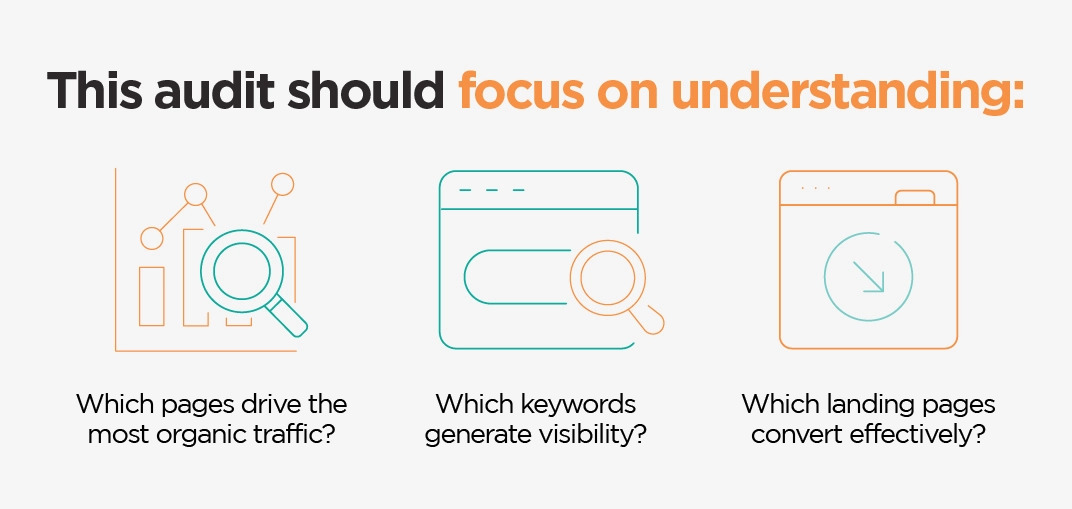
It should also evaluate user behaviour, including bounce rates, session duration, and navigation patterns. These insights help identify friction points in the current experience.
From a technical perspective, reviewing Core Web Vitals, page speed, mobile usability, and indexing status ensures that performance issues are not carried into the new site.
Just as importantly, documenting your current site architecture helps you understand how content is structured and what must be preserved during migration.
By the end of this phase, you should have a clear performance baseline. This becomes essential for measuring success after the redesign.
Strategising Content and URL Migration
One of the biggest risks in any website redesign is improper URL migration.
Search engines rely on consistency. When URLs change without proper mapping, rankings and traffic can drop quickly.
A strong SEO migration strategy ensures continuity.
This involves creating a complete inventory of existing URLs and mapping them carefully to their new equivalents. High-performing pages should be preserved, while weaker or duplicate content can be consolidated into stronger assets.
Equally important is implementing 301 redirects correctly. These redirects signal to search engines that content has moved permanently, allowing authority to transfer to the new URLs.
Internal links should also be updated to reflect the new structure, ensuring a seamless user journey.
When done correctly, migration allows your redesigned website to retain its authority while improving structure and usability.
Design and Development Best Practices for SEO
SEO should not be an afterthought. It must be integrated into both web design and web development from the start.
Search engines evaluate how your site is built, not just what it looks like.
A strong foundation includes a clean, crawlable structure that allows search engines to understand your content hierarchy. Proper use of headings improves both readability and indexing, while optimised images and efficient code contribute to faster load times.
With mobile-first indexing now standard, responsive design is no longer optional. Your site must perform consistently across devices.
Technical elements such as structured data (schema markup) also play a role in improving visibility in rich results and AI-generated answers.
A successful redesign balances aesthetics with performance. A visually appealing website that loads slowly or is difficult to navigate will struggle to perform in search.
Preserving SEO During the Relaunch
The website relaunch phase is where most SEO issues occur.
Even small technical oversights can lead to significant ranking drops.
Before going live, all redirects should be tested thoroughly. An updated XML sitemap should be prepared and submitted to search engines to guide crawling.
Metadata, canonical tags, and indexing directives must be reviewed to ensure they are correctly implemented.
It is also important to check for broken links and ensure that all key pages are accessible.
After launch, monitoring becomes critical. Observing crawl behaviour, indexing patterns, and early traffic trends helps identify issues before they escalate.
A controlled and carefully managed relaunch helps maintain stability and protects your existing visibility.
Post-Launch Monitoring and Continuous Improvement
A website redesign does not end at launch. In many ways, that is where optimisation begins.
Search performance may fluctuate temporarily, especially with evolving AI search trends, which is why ongoing monitoring is essential.
Tracking organic traffic trends, keyword rankings, and user behaviour helps determine whether the redesign is achieving its intended goals.
Technical performance should also be reviewed regularly, including Core Web Vitals, page speed, and mobile usability.
User feedback can provide valuable insights into navigation issues or friction points that analytics may not fully capture.
Continuous improvement ensures that your website evolves alongside user expectations and search engine updates, rather than becoming outdated again.
Common Website Redesign Mistakes to Avoid
Even well-planned redesigns can fail if key areas are overlooked. Avoiding these pitfalls can significantly reduce risk and improve long-term outcomes.
Many of these issues actually start before the redesign begins, especially when businesses skip essential planning steps outlined in this guide on things to do before a website redesign.
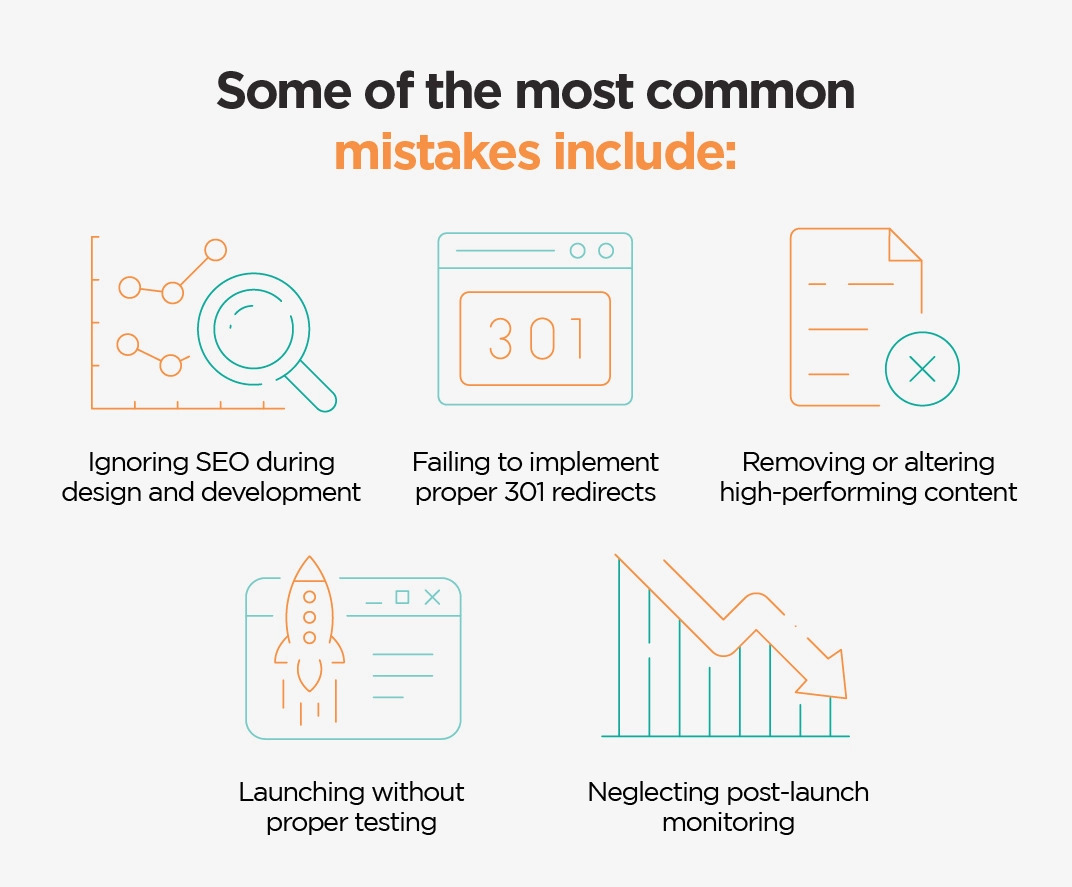
Avoiding these pitfalls can significantly reduce risk and improve long-term outcomes.
Conclusion
A successful website redesign is not just about creating a modern interface. It is about carefully balancing design, development, and SEO to ensure that performance is not only maintained but improved after launch.
By following a structured roadmap that includes auditing, migration planning, SEO-focused development, and post-launch monitoring, businesses can relaunch their websites confidently without losing valuable traffic or search visibility.
As the shift from search to AI-driven answers continues, it becomes even more important to ensure your website is optimised not just for rankings, but for visibility across modern search experiences.
If you are planning a redesign, approach it as a strategic transformation rather than a visual update, and you will be far more likely to achieve sustainable long-term results.
Work with Verz to plan and execute a seamless website redesign that protects your rankings, improves performance, and enhances user experience from day one.
Need a strong team specialised in SEO?
Speak to Verz today if you are looking to create a website with a
lasting impression to achieve online success.



 Share
Share