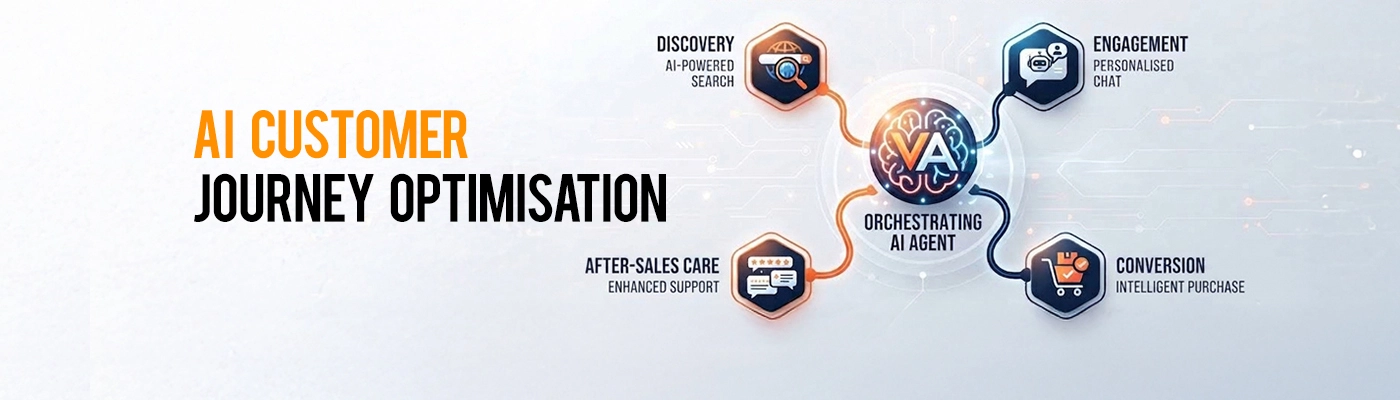
SEO in 2026 looks very different from what businesses practiced even a few years ago. Traditional SEO focused mainly on rankings and traffic, is no longer enough to compete in a landscape shaped by AI-driven search, voice assistants, and zero-click results.
Search has evolved from rankings → experiences → AI-generated answers. Today, users expect fast, accurate, and context-aware responses, often without clicking through multiple pages. This shift has introduced a new priority for brands: visibility without clicks.
Why Traditional SEO Is No Longer Enough in 2026?
Classic SEO strategies focused on:
- Keyword rankings
- Backlinks
- Page-level optimisation
While these elements still matter, AI-powered search engines now evaluate content differently. Visibility depends on:
- User experience quality
- Clarity of answers
- Trust and authority signals
- Structured, reusable content
SEO success in 2026 is no longer just about attracting visitors it’s about being chosen as the answer.
Layer 1 – SXO (Search Experience Optimisation)
What is SXO in 2026?
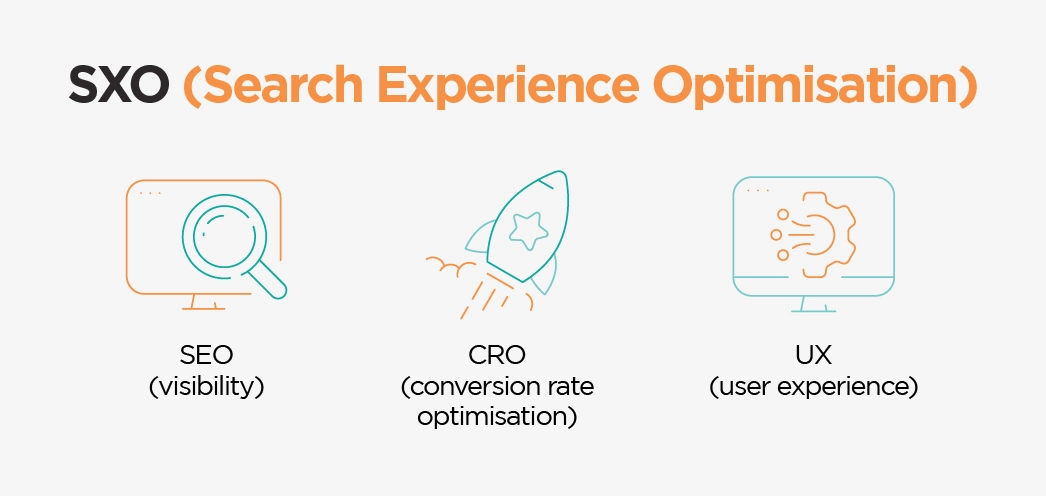
SXO, or Search Experience Optimisation, combines:
- SEO (visibility)
- UX (user experience)
- CRO (conversion rate optimisation)
As a result, modern search engine optimisation services must go beyond classic optimisation techniques. To stay competitive, businesses now need to operate across four integrated SEO layers: SXO, AIO, GEO, and AEO.
Key SXO Elements
SXO, or Search Experience Optimisation, combines:
- Page speed & Core Web Vitals for fast, frictionless access
- Mobile-first UX & navigation flow to support on-the-go users
- Scroll depth, dwell time, and engagement metrics
- CTA clarity & intent alignment to guide user decisions
Why Does SXO Matters for Rankings?
Google increasingly measures user satisfaction signals to evaluate content quality. Pages that load quickly, answer intent clearly, and provide smooth navigation perform better over time.
Simply put:
Better UX → higher conversions → stronger visibility
Actionable SXO Checklist
- Reduce page load time to under 2 seconds
- Align content structure with search intent
- Simplify navigation and calls-to-action
Layer 2 – AIO (AI Optimisation)
What is AIO?
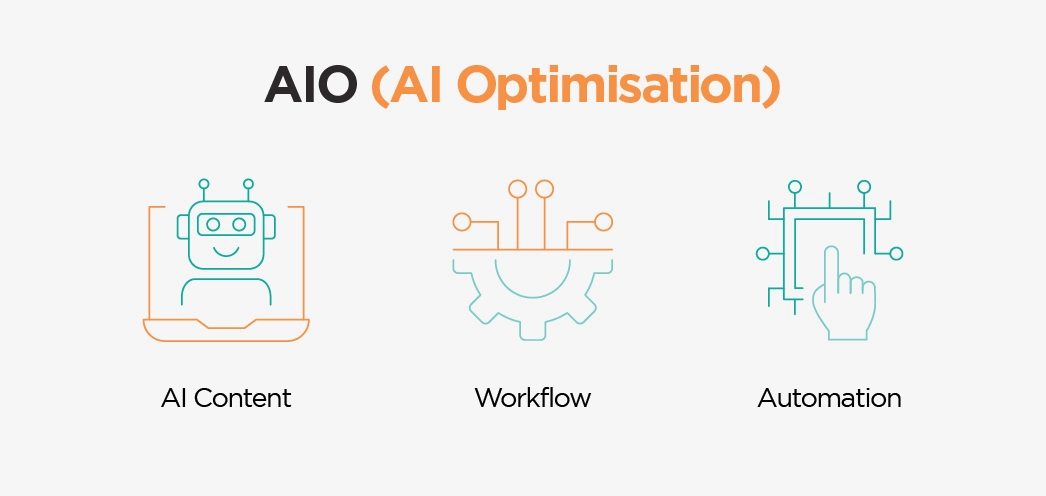
AI Optimisation (AIO) focuses on using artificial intelligence to enhance and scale SEO workflows without compromising quality or accuracy.
As AI-driven search continues to reshape how content is evaluated and surfaced, AIO helps teams adapt their processes to modern search environments.
For agencies and businesses offering search engine optimisation services, AIO enables faster execution while maintaining consistency, relevance, and strategic oversight.
How AIO Transforms Content Production?
- AI-assisted drafting and editing
- Workflow automation for repetitive tasks
- Content scheduling and internal linking
- Multi-format content creation (blogs, FAQs, short answers)
AIO Best Practices
- Use AI for speed and efficiency, humans for strategy and accuracy
- Repurpose content using templates
- Perform AI-assisted SEO audits to uncover opportunities
AIO Tools & Use Cases
- SEO content calendars
- Programmatic SEO for large websites
- Scalable local landing pages for Local SEO Services
Layer 3 – GEO (Generative Engine Optimisation)
What is GEO?
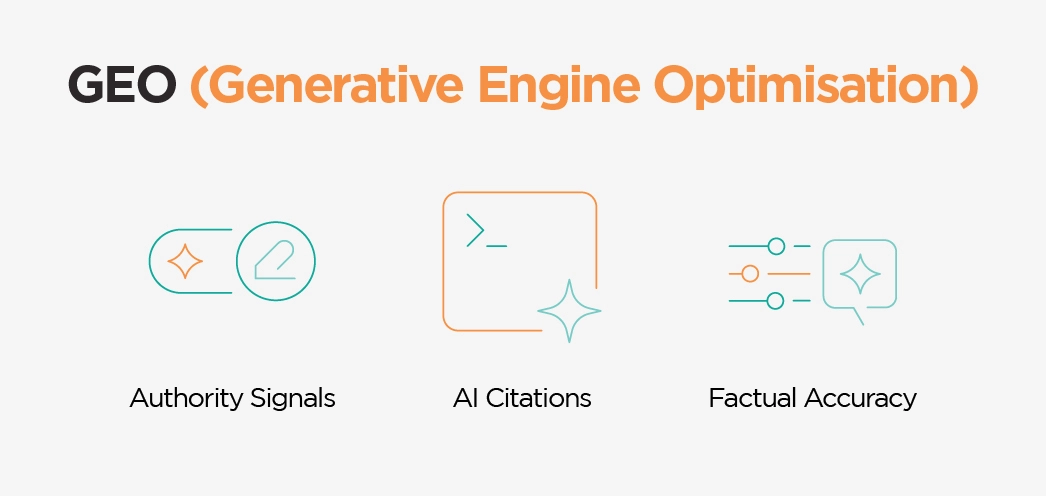
Generative Engine Optimisation (GEO) prepares content to be summarised, cited, and referenced by AI platforms such as ChatGPT, Gemini, and Perplexity.
As AI-driven discovery grows, generative engine optimisation plays a key role in ensuring information remains accurate and trustworthy when used in AI-generated responses.
Unlike traditional search engines, generative engines prioritise:
- Authority
- Trustworthiness
- Contextual completeness
How AI Engines Choose Sources
- Strong authority and trust signals
- High factual accuracy
- Structured, citation-friendly formats
GEO Content Strategies
- Publish industry studies and data-backed insights
- Provide clear definitions and comparisons
- Build topical clusters with expert commentary
- Maintain fact-checked, up-to-date content
GEO Optimisation Checklist
- Use statistics and credible sources
- Add citation hooks within content
- Build authority consistently across related topics
Layer 4 – AEO (Answer Engine Optimisation)
What is AEO?
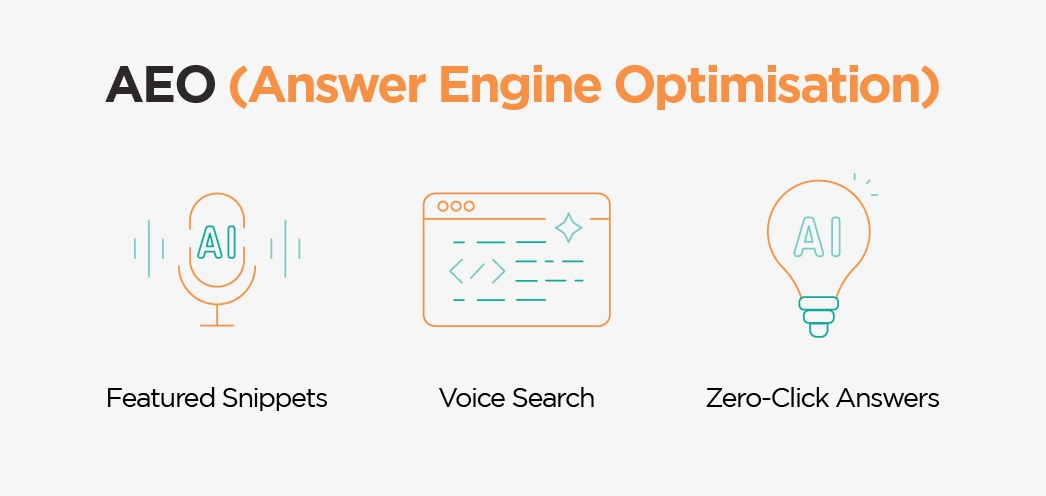
Answer Engine Optimisation focuses on being selected for:
- Featured snippets
- AI overviews
- Voice search responses
The goal is zero-click visibility, where users receive trusted answers directly within search and AI-generated results. As zero-click search behaviour continues to grow, brands that understand how answers are surfaced and selected are better positioned to maintain visibility even when traditional traffic declines.
Why AEO is Critical in 2026
Many users now get answers without visiting websites. Brands that succeed are those that become the default answer in search and AI results. This shift has made Answer Engine Optimisation a core part of modern SEO, especially as AI platforms prioritise content that is clear, structured, and easy to reuse in generated responses.
AEO Best Practices
- Structured FAQs with 40–60 word answers
- Schema markup (FAQ, HowTo, LocalBusiness)
- Voice-friendly, conversational question keywords
- Clear entity and brand signals
Examples of AEO Content
- “What is…?” definitions
- “How much does… cost in [city]?”
- “Best option for…” comparisons
These formats are especially effective for businesses offering Local SEO Services, where immediacy and relevance are key.
How do the 4 Layers Work Together?
Each layer plays a distinct role:
- SXO converts users
- AIO scales content efficiently
- GEO builds trust with AI engines
- AEO delivers instant visibility
SEO in 2026 is no longer linear it’s layered.
SEO Strategy Framework for 2026
Step-by-Step Implementation
- Fix UX and search intent alignment (SXO)
- Automate workflows intelligently (AIO)
- Build authority for AI-driven engines (GEO)
- Capture featured answers and AI visibility (AEO)
This framework reflects how modern search engine optimisation services must be structured to succeed in AI-driven search environments.
Conclusion
SEO is evolving from traffic → trust → answers
Businesses that adapt early will gain visibility across traditional search engines, AI platforms, and voice interfaces. The future of SEO lies in experience, automation, authority, and answers.
Brands that master all four layers will lead search visibility in 2026 and beyond. If you’re ready to future-proof your SEO strategy, get in touch with us to start the conversation.
Need a strong team specialised in SEO?
Speak to Verz today if you are looking to create a website with a
lasting impression to achieve online success.



 Share
Share