Search is no longer about ten blue links on a page. With the rise of AI-driven answers, users are now receiving information directly from search engines and conversational interfaces often without ever clicking through to a website.
This shift, known as zero-click search, is reshaping how brands build visibility and, ultimately, conversions. The question is no longer “How do we get more clicks?” but rather “How do we remain discoverable when clicks are no longer guaranteed?”
The Rise of Zero-Click Search and Its Impact on Attribution
Zero-click discovery means users are satisfied within the search or AI interface. Google’s featured snippets, ChatGPT’s conversational responses, and Perplexity’s summary cards all deliver instant information without requiring a website visit a growing trend often referred to as zero click searches.
Imagine this scenario:
A busy professional asks, “What are the best noise-cancelling headphones for working from home?”
Their voice assistant compiles data from social media mentions, product reviews, and brand websites, then recommends one specific brand. Later, that user opens the brand’s mobile app and makes a purchase.
While the sale is attributed to the mobile app (a direct channel), the real influence originated from AI’s recommendation which traditional analytics fail to capture.
This creates what experts call the “influence blind spot” where high-value top-funnel touchpoints are under-credited, leading to skewed ROI reporting and missed revenue opportunities.
Why Traditional Attribution Models Are Failing?
Click-based attribution worked well when users followed linear paths: search → website → conversion.
But today’s journeys are multi-channel, AI-mediated, and context-driven.
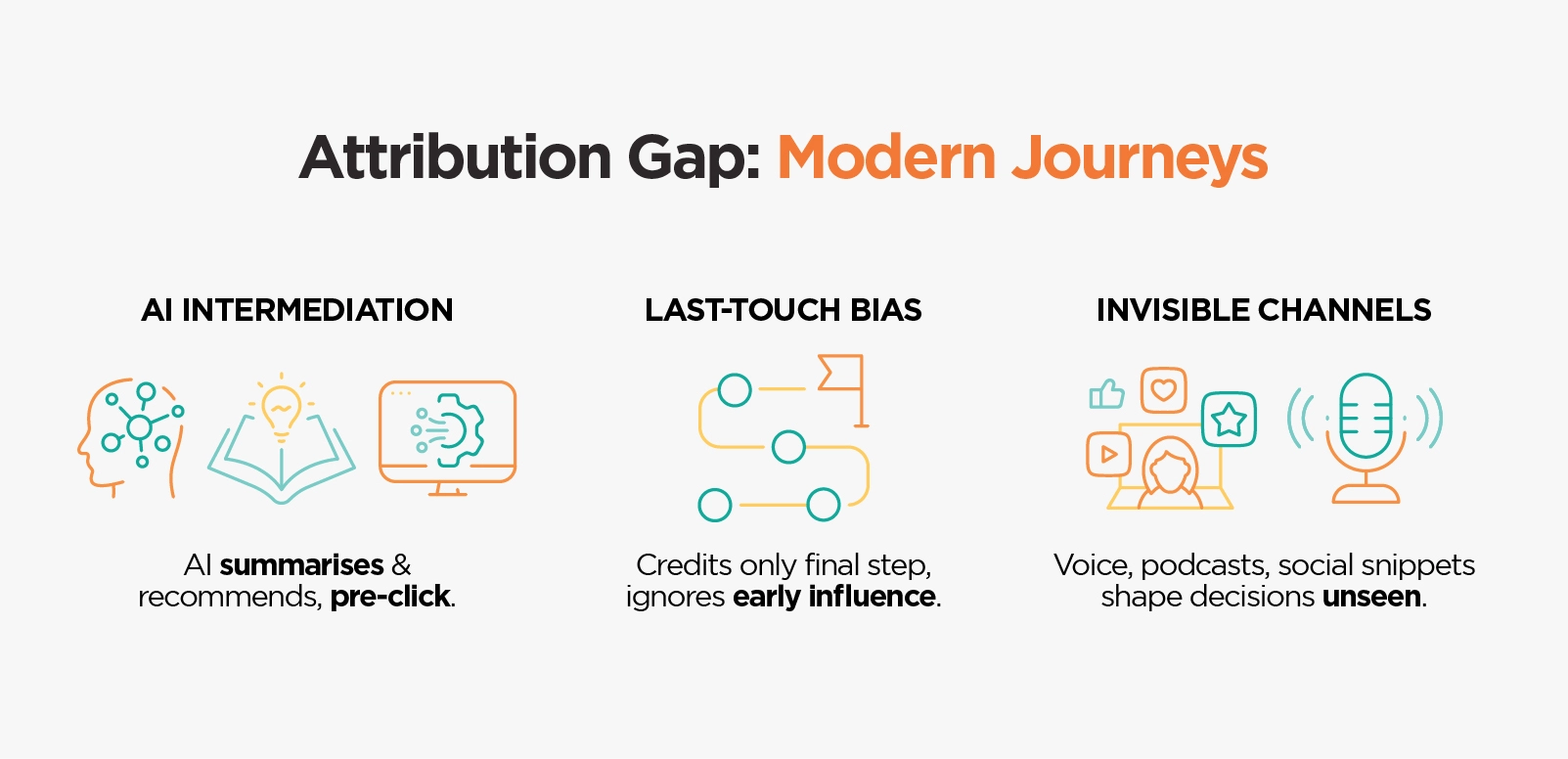
Key reasons old models fall short:
- AI acts as an intermediary, summarising and recommending before a click happens.
- Last-click metrics credit only the final step, ignoring top-funnel influence.
- Emergent channels, voice assistants, podcasts, social snippets shape decisions invisibly.
This makes “earned influence” (organic visibility through AI mentions, snippets, or citations) the new metric of digital success similar to how earned media value (EMV) once quantified unpaid brand exposure.
The Shift Toward Answer Engine Optimisation (AEO)
What Is AEO?
Click-based attribution worked well when users followed linear paths: search → website → conversion.
Answer Engine Optimisation (AEO) is the next evolution of SEO. While SEO helps websites rank higher for human clicks, AEO focuses on making your content understandable, quotable, and preferred by AI systems.
If you’re exploring how to apply AEO for AI search in practice, our guide breaks down what brands need to know about structuring content for answer engines like Google AI Overviews and ChatGPT.
In short, SEO wins clicks. AEO wins answers.
AI engines like Google AI Overviews, ChatGPT, and Perplexity don’t just rank pages, they synthesise responses. To appear as a cited source, brands must craft content that’s:
- Clear, factual, and authoritative
- Structured with schema and Q&A formatting
- Optimised for conversational queries and intent
How AEO Changes the Search Landscape?
Traditional SEO aims to drive users to your site. AEO ensures your expertise appears within AI-generated responses.
The distinction:
- SEO outcome: Page rank + traffic
- AEO outcome: Brand mention + citation visibility
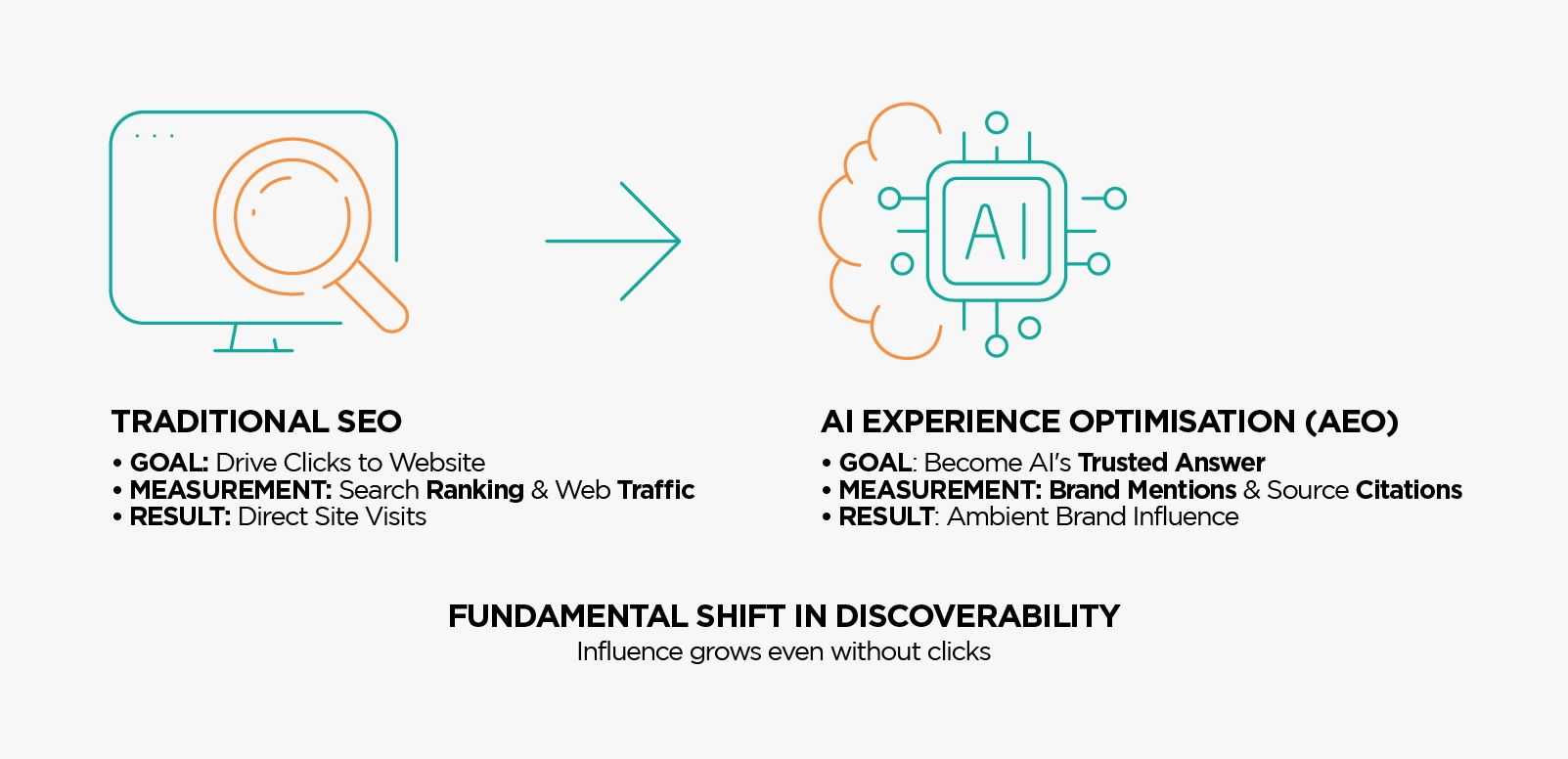
This is a fundamental shift in discoverability. Your brand’s influence can grow even when no clicks occur if your content becomes the trusted answer selected by AI.
How AEO Intelligence Empowers Brands?
AEO intelligence platforms are designed to help brands measure and optimize their performance within AI-powered search environments.
Here’s how they create measurable advantage:
1. Discovering the Total AI Opportunity (TAM for GenAI)
Unlike traditional keyword-based SEO, AEO analyses natural language questions that users ask AI assistants.
This allows brands to uncover new, conversational search opportunities identifying untapped content gaps and potential topics that AI tools are already referencing.
2. Competitive & Category Analysis
AEO tools can reveal where and how competitors are being cited in AI responses.
If an AI assistant consistently mentions a rival but not your brand, that’s a signal to create targeted, authoritative content addressing those queries.
This enables brands to close visibility gaps and reclaim share of influence.
3. Real-Time Monitoring of AI Mentions
LLM-driven results fluctuate frequently as AI models learn and adapt.
Continuous AEO tracking helps brands monitor where they appear in AI answers (e.g., Google AI Overviews, Perplexity, ChatGPT) and how their visibility changes over time.
Quick insights enable proactive content updates, ensuring your brand remains part of the conversation.
4. Measuring New Metrics: Visibility, Sentiment & Brand Share
Clicks and impressions alone no longer tell the full story.
Modern AEO metrics include:
- Brand mention share: % of AI answers citing your brand
- Citation frequency: How often your brand is referenced
- Sentiment analysis: Tone of mentions within AI outputs
- Authority growth: Week-over-week visibility improvements
These data points reveal how your brand is performing in the zero-click AI ecosystem, the new frontier of influence.
Bridging the Measurement Gap: Turning Hidden Influence into Growth
The future of performance marketing lies in recognising that not all influence is clickable.
Brands must evolve from tracking last-click conversions to multi-touch, AI-informed engagement.
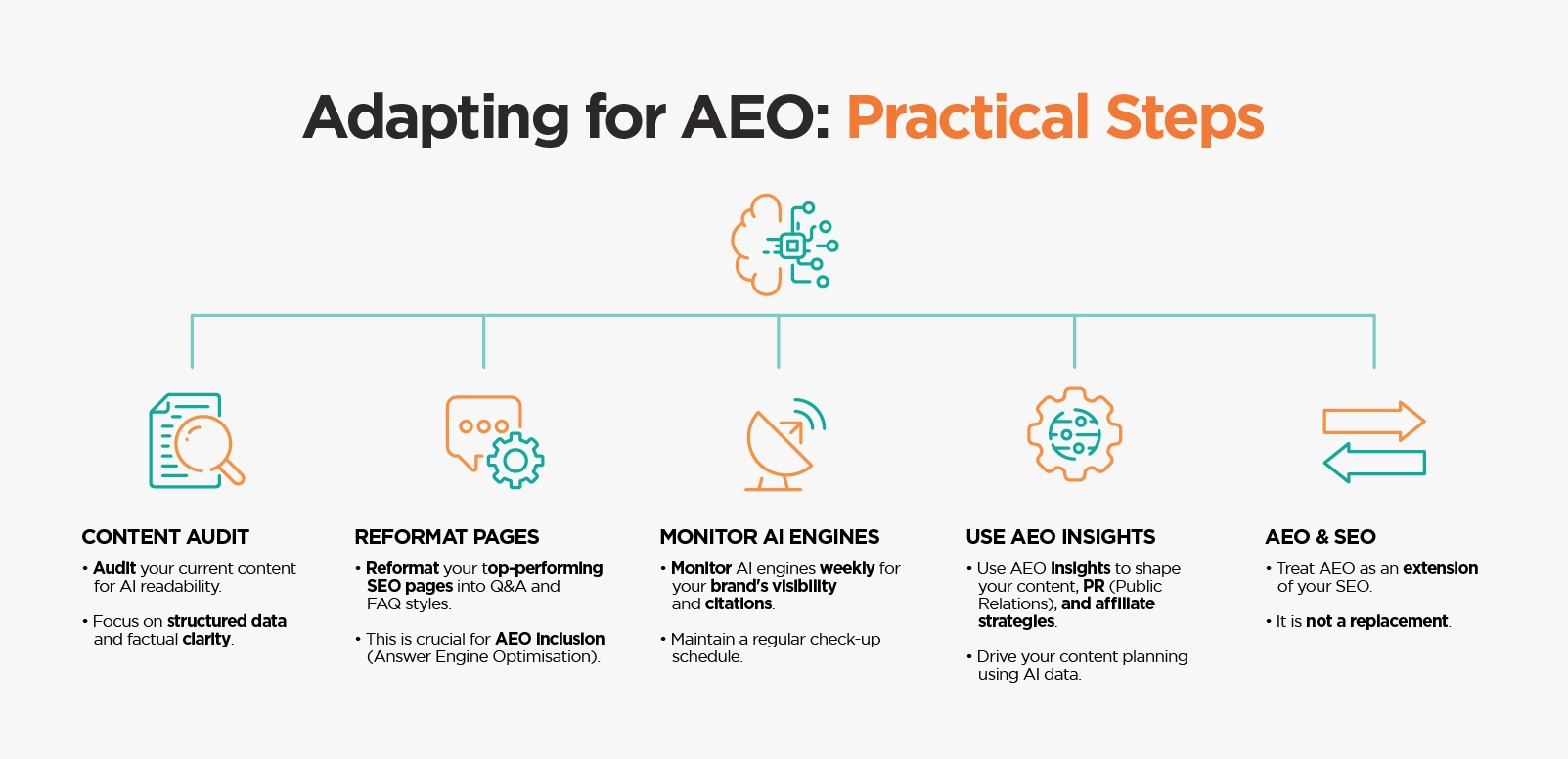
By doing so, you convert unseen AI recommendations into measurable, revenue-driving influence.
The Future: Beyond the Click Economy
Clicks will remain part of performance measurement but they’re no longer the ultimate indicator of success.
In the zero-click AI era, visibility within AI-generated content is the new currency of trust.
Brands that master AEO will dominate this emerging landscape, ensuring their expertise shapes the answers people (and AI) rely on most.
Conclusion
The marketing world is moving beyond the click. To remain visible and competitive, brands must adapt to how AI influences consumer behavior long before a user ever reaches their site.
By implementing Answer Engine Optimisation (AEO), marketers can bridge the gap between unseen influence and measurable performance, ensuring their brand’s voice is heard, trusted, and cited across the AI ecosystem. The brands that optimise for AI discoverability today will own the customer journey of tomorrow.
To continue the conversation about optimising your brand for AI discoverability, contact us today.
Need a strong team specialised in SEO?
Speak to Verz today if you are looking to create a website with a
lasting impression to achieve online success.


 Share
Share