Online shopping in Singapore has become more than just a convenience, it’s a lifestyle. From late-night impulse buys to everyday groceries, eCommerce is now the backbone of modern retail.
But with this rapid shift came a wave of challenges: fake reviews, unclear pricing, misleading discounts, and a rise in online scams.
Here’s the good news: Singapore has introduced new eCommerce guidelines that aim to make online shopping safer, clearer, and fairer whether you’re a shopper, a small business owner, or a digital platform.
In this guide, we’ll explore what’s changing in Singapore online shopping, why it matters, and how these changes benefit everyone in the ecosystem.
Why These New Online Shopping Rules Matter in Singapore?
Singapore’s eCommerce market generated nearly SGD 400 billion in revenue last year, an all-time high. Online platforms like Shopee, Lazada, and TikTok Shop have become digital malls but with that growth came concerns:
- Fake or manipulated reviews
- Unfair algorithms disadvantaging small sellers
- “Too-good-to-be-true” discounts
- Aggressive subscription traps
- A growing number of scams targeting consumers
The new eCommerce guidelines introduced by the Consumers Association of Singapore (CASE) and Competition and Consumer Commission of Singapore (CCCS) aim to address these concerns head-on.
Rather than policing innovation, the goal is to build a more transparent, trustworthy digital marketplace for both buyers and sellers.

How the Guidelines Improve Transparency for Shoppers?
Ever bought something with hundreds of glowing reviews, only to receive a product that looked nothing like the photos? Or realised too late that you were somehow signed up for a subscription? You are not alone.
The guidelines now address these pain points:
- Reviews you can trust: Sellers cannot fabricate reviews, copy them, or delete negative ones just because they affect sales. The only reason to remove a review is if it is offensive or abusive.
- Discounts that are real: “70% off” should mean exactly that. No more inflated “original prices” designed to make discounts look better than they are.
- Clearer product details: Listings must be upfront about prices. No more vague ranges like “$10 to $500” that trick you into clicking.
- Subscription clarity: Those pre-ticked boxes that sneak you into recurring charges are now off-limits. Subscriptions should be easy to spot and just as easy to cancel.
- Honest urgency cues: Platforms cannot show endless countdown timers or “only 2 left” messages that never run out. Urgency tactics must reflect reality.
The bottom line? Shopping should feel transparent, not like a guessing game.
What’s Changing for Small Businesses and Online Sellers in Singapore?
Selling online has often felt like running a race where someone keeps moving the finish line. These new rules aim to even things out.
- Fairer treatment: Platforms cannot favour their own products or partners in search results. Independent sellers must be given equal opportunity to be discovered.
- Freedom to sell elsewhere: Sellers should not be restricted from listing products on other platforms unless there is a solid reason.
- Clearer communication: If a product gets removed, platforms must explain why and give sellers a proper way to appeal.
- Transparency in algorithms: Merchants deserve to know what affects their rankings, whether it is paid ads, sales performance or something else.
For small businesses, this means fewer hidden obstacles and more predictable rules to grow by.
Cracking Down on Scams (Finally!)
Here is something reassuring: eCommerce scams in Singapore fell by more than half in just one year. The new rules are designed to keep that trend going.
- Stricter seller verification: Platforms must check merchants’ identities properly before letting them sell. Think of it as a bouncer at the door.
- Faster action against fraud: When a suspicious seller is flagged, platforms now have just 24 hours to act.
- Better record-keeping: Platforms must keep detailed logs, transactions and chats to help trace scammers if things go wrong.
- Proactive monitoring: Instead of waiting for reports, platforms must spot suspicious behaviour early and act before damage is done.
This means a safer environment for shoppers and more trust in online marketplaces.
What This Means for You?
- If you are a shopper:
- Better confidence in product reviews
- Less misleading pricing and urgent pressure tactics
- More transparent terms and cancellation options
- If you are a seller:
- More equal opportunities to compete
- Clearer rules to appeal platform decisions
- Increased trust among customers leading to more sales
- If you are a platform:
- Higher accountability
- A need to update algorithm transparency and seller verification processes
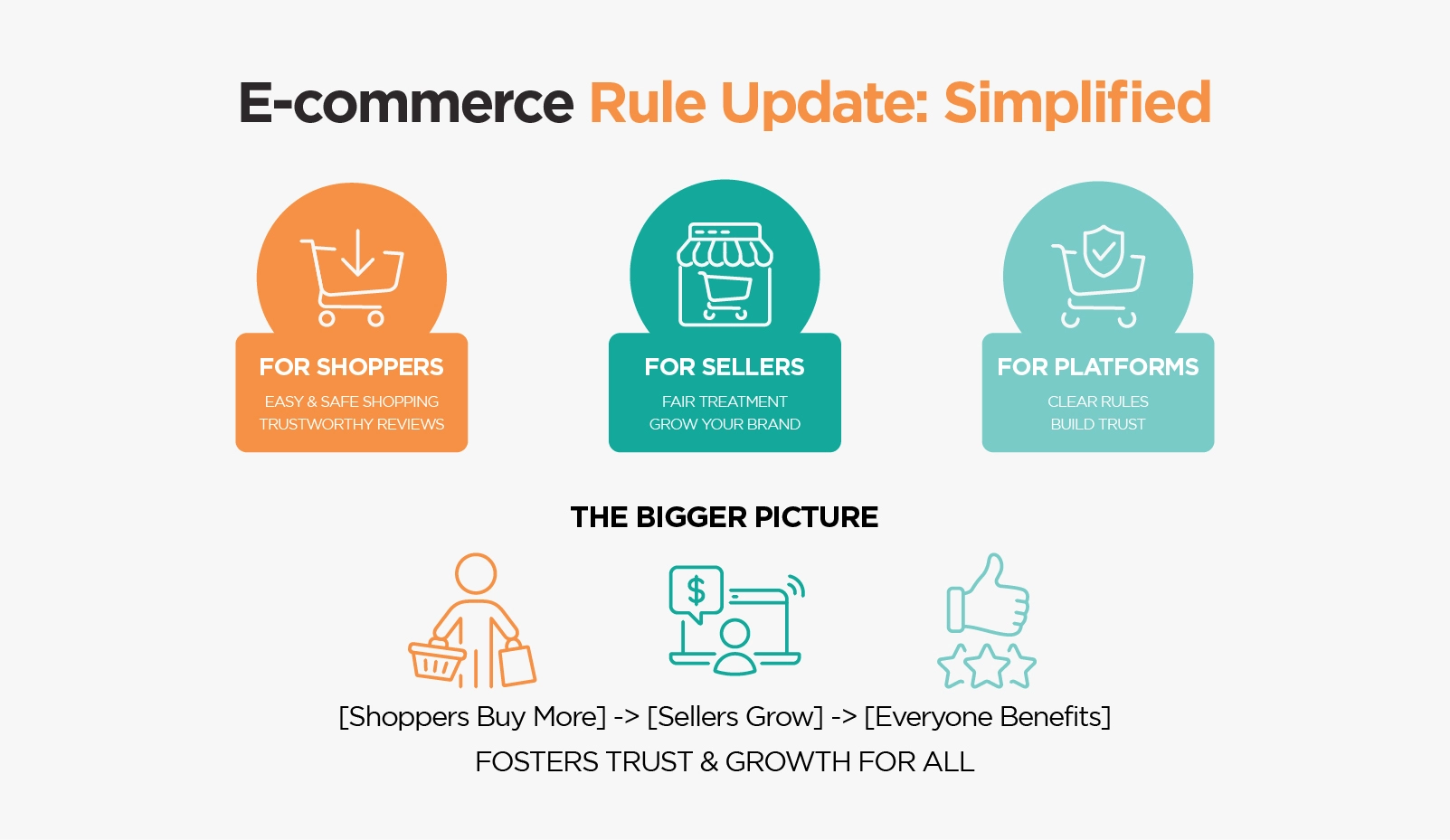
The bigger picture is simple. When shoppers trust platforms, they buy more. When sellers are treated fairly, they grow. And when scams are shut down, everyone benefits.
Conclusion: A Step Towards Digital Maturity
These updates will not wipe out scams overnight, but they mark an important step in bringing structure and accountability to Singapore’s digital marketplace. By shaping the guidelines with input from platforms and industry players, regulators have struck a balance that builds trust without stifling innovation.
For shoppers tired of fake reviews and sellers frustrated by unfair rules, this is real progress. The challenge lies in follow-through, as guidelines only matter if platforms enforce them and authorities act when they do not. Still, setting clear expectations is a crucial move towards a fairer, safer and more transparent eCommerce space.
If you’d like to learn how your business can adapt to these new eCommerce guidelines, contact us today to get expert guidance and support.
Need a strong team specialised in SEO?
Speak to Verz today if you are looking to create a website with a
lasting impression to achieve online success.


 Share
Share