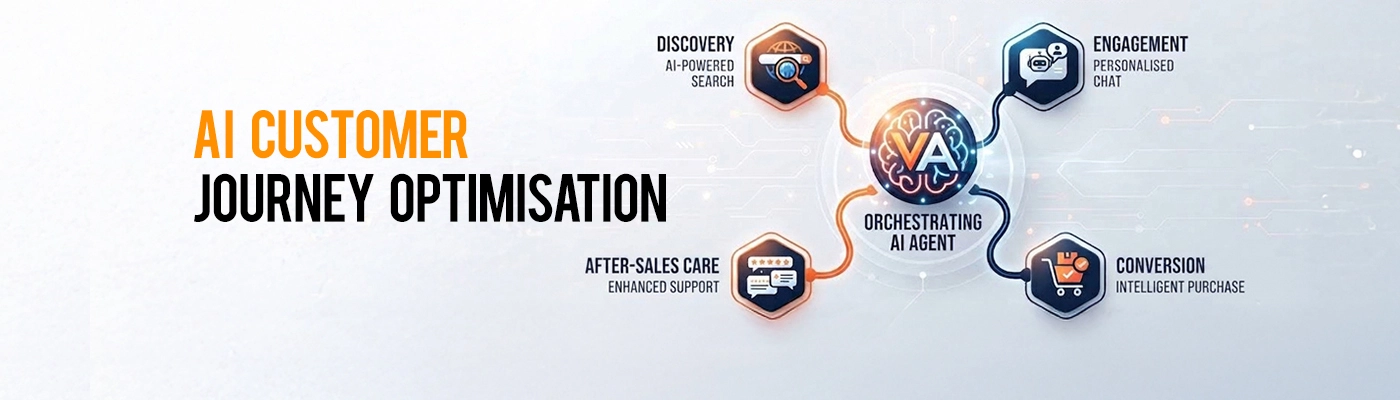
SaaS websites are built with one clear goal: turning visitors into users. Whether that means free trial sign-ups, demo bookings, or long-term subscriptions, every element of the website must guide users toward action.
This is where SaaS website design principles become critical. A high-performing SaaS website does more than look polished. It communicates value quickly, builds trust early, and removes friction across the user journey.
In this guide, we look at the key design principles that actually help improve conversions and engagement.
Understanding the Unique Aspects of SaaS Websites
Unlike traditional websites, SaaS platforms are not built for one-time transactions. They support an ongoing relationship between the product and the user. This makes SaaS website design fundamentally different.
Core characteristics of SaaS websites:
- Subscription-based product model with continuous usage
- Multi-stage customer journey from awareness to retention, requiring clear guidance at every stage
- Need to explain digital value quickly and clearly
- High comparison with competing tools during the research stage
- Acts as both a marketing site and a product entry point
SaaS websites need to communicate value within seconds, but also allow users who want more detail to explore further. Good design supports both types of behaviour without overwhelming either group.
Why SaaS Website Design Principles Matter More Than Ever?
SaaS products are intangible. Users cannot physically interact with them before making a decision.
Because of this, SaaS website design principles must focus heavily on:
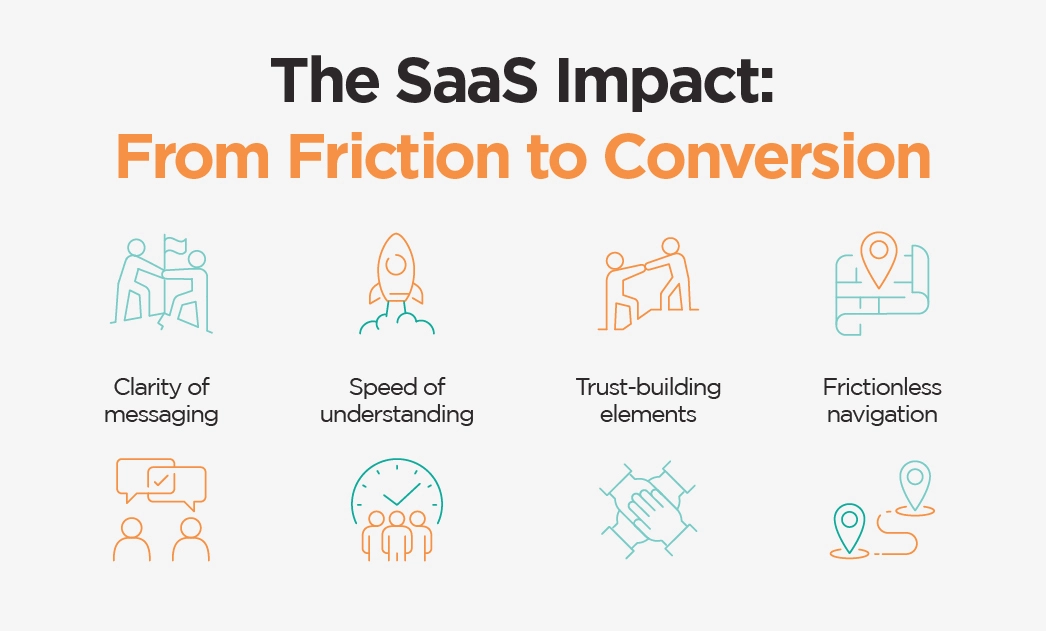
In competitive markets, users often compare multiple tools at once. If your website fails to communicate value quickly, they will simply move on.
User-Centric Design as the Foundation
At the core of all effective SaaS website design principles is user-centric thinking. This means designing around real user needs, not internal assumptions.
A user-focused SaaS website:
- Prioritises user goals over company messaging
- Guides users clearly toward next steps
- Reduces cognitive load through simple layouts
- Makes the product value immediately obvious
When users understand what your product does within seconds, engagement increases naturally.
Key UX Principles That Drive Sign Ups and Demos
A SaaS website needs to feel smooth and effortless to use. Good UX removes confusion and helps users move forward without hesitation, which highlights the importance of UX design in driving conversions.
Important UX principles:
- Keep layouts simple and messaging clear
- Present information in a structured, easy-to-follow way
- Make interactions feel responsive and intuitive
- Use case studies and reviews to build trust
- Highlight integrations to reduce hesitation
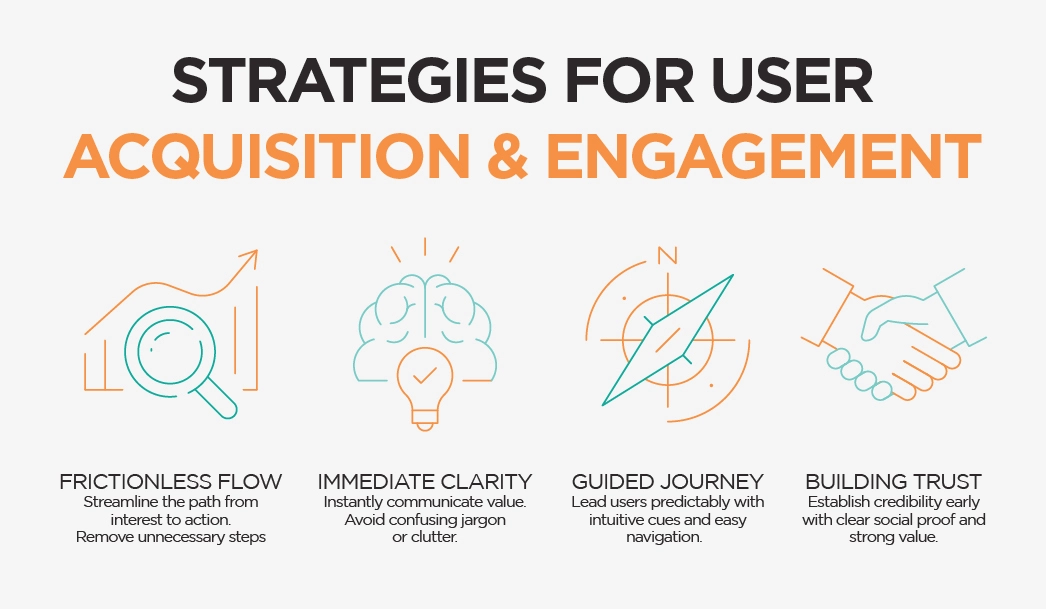
When UX is done well, users feel more confident exploring the product and are more likely to sign up or request a demo.
Clarity and Simplicity Win Every Time
Simplicity is often what separates high-converting SaaS websites from confusing ones. If users feel overwhelmed, they usually leave.
How to achieve clarity in SaaS design:
- Use short, direct headlines
- Avoid unnecessary jargon
- Break content into clear sections
- Keep each section focused on one idea
- Make everything easy to read and scan
Every page should quickly answer three things: what the product is, what problem it solves, and why it matters.
Effective Use of Feedback Loops
Feedback loops help users feel like the system is responding to them. This builds confidence and reduces uncertainty, especially during onboarding.
Types of feedback loops in SaaS UX:
- Micro interactions like button animations
- Progress indicators during onboarding
- Confirmation messages after actions
- Step-by-step onboarding guidance
- Real-time system responses
These small touches make the experience feel more reassuring and easier to follow.
Utilising Case Studies for Credibility
Case studies are one of the strongest ways to show real results. They help potential users see how the product works in real situations, not just in theory.
Key elements of strong case studies:
- Clear explanation of the client’s challenge
- Simple breakdown of the solution
- Measurable results and outcomes
- Relevant context for the target audience
- Easy-to-follow storytelling structure
Good case studies help users imagine their own success with the product, which builds trust.
Gathering and Displaying User Reviews
User reviews often carry more weight than marketing copy because they feel more honest and relatable.
Best practices for user reviews:
- Show reviews on key decision pages
- Highlight specific experiences, not generic praise
- Avoid vague or overly polished testimonials
- Include real names and context where possible
- Spread reviews across the user journey
When placed well, reviews can make a big difference at important moments like pricing or sign-up pages.
Integrations as Trust Builders
Integrations help users feel like the product will fit into their existing setup without disruption.
Why integrations matter:
- Show compatibility with familiar tools
- Reduce switching anxiety
- Support smoother workflows
- Strengthen the product ecosystem
- Increase confidence in adoption
Clear integration messaging reassures users that they will not need to rebuild their entire workflow.
Common SaaS Design Mistakes to Avoid
A lot of SaaS websites underperform because of simple but costly mistakes.
Common mistakes in SaaS design:
- Designing without real user data
- Making navigation too complicated
- Poor mobile experience
- No clear conversion path
- Weak or unclear messaging hierarchy
Fixing these issues often leads to immediate improvements in performance.
Designing High-Converting SaaS Landing Pages
Landing pages are often the first real interaction with your product. Applying SaaS landing page design principles ensures they convert effectively, especially when supported by strong landing page optimisation strategies.
Key elements of effective SaaS landing pages:
- Strong, clear value proposition
- Benefit-driven supporting messaging
- Visible trust signals like reviews or case studies
- One clear call to action
- Clean and distraction-free layout
Each landing page should guide users towards one action only, such as signing up or booking a demo. A well-crafted call to action can significantly improve conversion rates when aligned with user intent.
The Importance of A/B Testing in SaaS Design
No SaaS website should rely purely on assumptions. A/B testing in SaaS website design allows teams to make decisions based on real user behaviour.
Best practices for A/B testing:
- Start with a clear hypothesis
- Test one change at a time
- Split traffic evenly
- Run tests long enough for reliable results
- Focus on meaningful metrics
This makes optimisation more structured and evidence-based.
Interpreting A/B Test Results
It is not enough to just look at which version “won”. You need to understand why it worked.
How to interpret results effectively:
- Check for statistical significance
- Look at conversion quality, not just volume
- Review user behaviour patterns
- Compare the longer-term impact
- Avoid decisions based on small samples
This helps ensure changes actually improve performance, not just short-term numbers.
A/B Testing Common Design Elements
Some parts of a SaaS website have a bigger impact on conversions and are worth testing regularly.
Common elements to test:
- Headlines and value propositions
- Call to action wording and placement
- Pricing page layout
- Form length and structure
- Hero section messaging and design
Even small changes in these areas can lead to noticeable improvements.
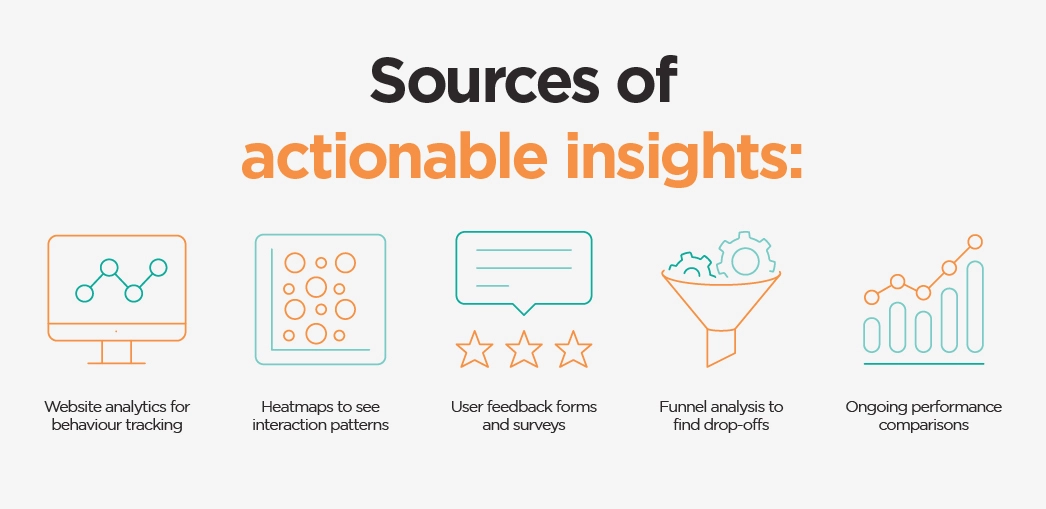
Using Data for Continuous Improvement
A SaaS website is never really “finished”. It should keep improving based on how users behave.
Combining these insights helps refine your SaaS website design strategy over time.
Conclusion
Good SaaS website design is really about balance. It needs clarity, trust, usability, and constant improvement. Every detail, from messaging to layout to testing, plays a part in guiding users towards taking action.
By focusing on user needs, avoiding common mistakes, and improving based on real data, SaaS businesses can build websites that do more than attract traffic. They can convert visitors into long-term customers.
If you want to improve your SaaS website performance and increase conversions, contact Verz and let’s design and optimise a user-focused experience that actually drives results.
Need a strong team specialised in SEO?
Speak to Verz today if you are looking to create a website with a
lasting impression to achieve online success.



 Share
Share