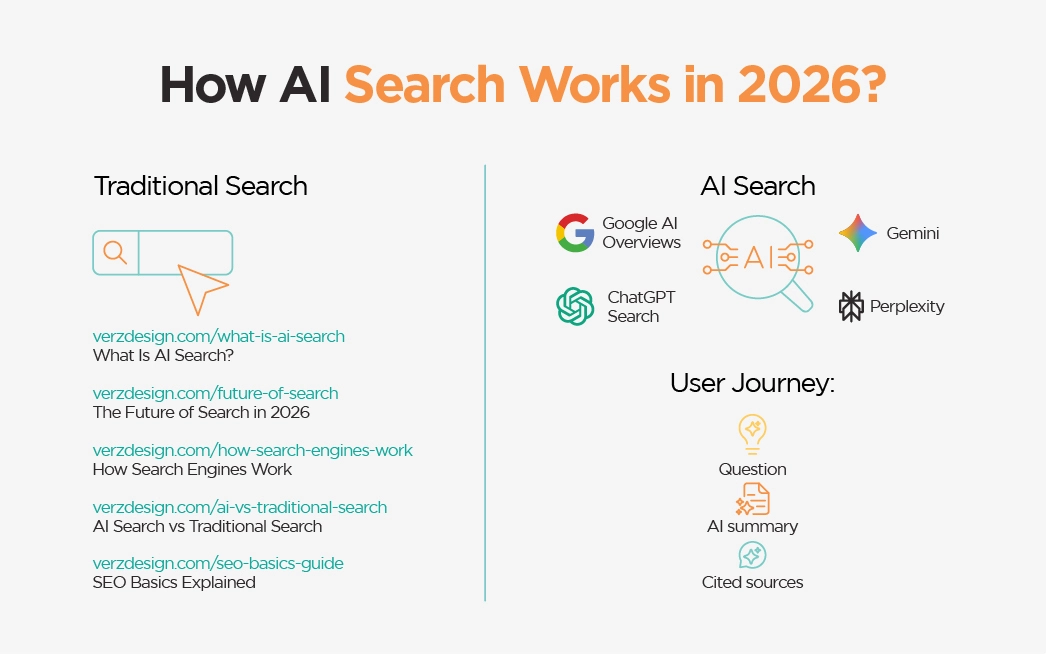
Search is no longer limited to ten blue links. In 2026, SEO is being reshaped by AI-powered search experiences that answer questions directly, summarise content instantly, and guide decisions without requiring users to click through multiple pages.
Google AI Overviews, ChatGPT Search, Gemini, and Perplexity have changed how people discover information. As a result, traditional SEO alone is no longer enough. Brands that want to stay visible must adapt to how AI systems understand, select, and cite content.
This guide explains how AI search is changing SEO in 2026, what businesses need to do differently, and how to optimise content for both search engines and answer engines.
What Is AI Search in 2026?
AI search refers to search experiences powered by large language models and machine learning systems that interpret intent, summarise answers, and present information contextually rather than ranking pages purely by keywords.
In 2026, AI search includes:
- Google AI Overviews
- ChatGPT Search
- Gemini
- Perplexity
- Voice and conversational search
- Multi-modal search (text, image, voice)
Instead of showing a list of links, these systems often generate answers directly, pulling insights from trusted, well-structured sources.
Why Traditional SEO Alone No Longer Works?
Classic SEO focused heavily on:
- Keyword placement
- Backlinks
- Page-level optimisation
While these still matter, AI search evaluates content differently. AI systems prioritise:
- Clarity of answers
- Entity understanding
- Topical authority
- Trust signals
- Structured data
Pages written only to “rank” often fail to be understood or cited by AI engines. In 2026, visibility depends on whether AI systems can confidently use your content as a source.
The Rise of AEO and GEO in Modern SEO

1. Answer Engine Optimisation (AEO)
Answer Engine Optimisation focuses on structuring content so it can be easily understood and reused by AI-driven search experiences. This means presenting information in a way that allows search engines and answer engines to extract clear, accurate responses to user queries.
In practice, AEO involves:
- Clear question-and-answer formatting
- Concise, direct explanations
- FAQ-style content sections
- Structured data and Q&A schema markup
When implemented correctly, AEO improves a page’s visibility across modern search surfaces, including Google AI Overviews, People Also Ask (PPA) results, and voice-based search responses. As AI-driven discovery continues to grow, understanding how AEO supports AI search readiness becomes an essential part of modern SEO strategy.
2. Generative Engine Optimisation (GEO)
Generative Engine Optimisation focuses on preparing content so it can be accurately summarised, interpreted, and cited by AI-driven platforms such as ChatGPT, Perplexity, and other generative search experiences. Rather than optimising for a single search result, GEO helps ensure information remains reliable and contextually complete when used in AI-generated responses.
In practice, GEO prioritises:
- Entity optimisation to clearly define brands, topics, and relationships
- Contextual completeness so answers remain accurate when extracted
- Trustworthiness and source credibility signals
- Natural language clarity that aligns with how users ask questions
As AI-generated summaries increasingly influence discovery and decision-making, understanding how generative engines evaluate and reference content has become a critical extension of modern SEO strategy.
Together, SEO + AEO + GEO form the new foundation of search visibility in 2026.
How AI Search Understands Content Differently?
AI search engines don’t just scan keywords. They evaluate:
- What is the page about?
- Who is the content for?
- Whether the information is reliable
- How clearly answers are structured?
This is where entity optimisation becomes critical.
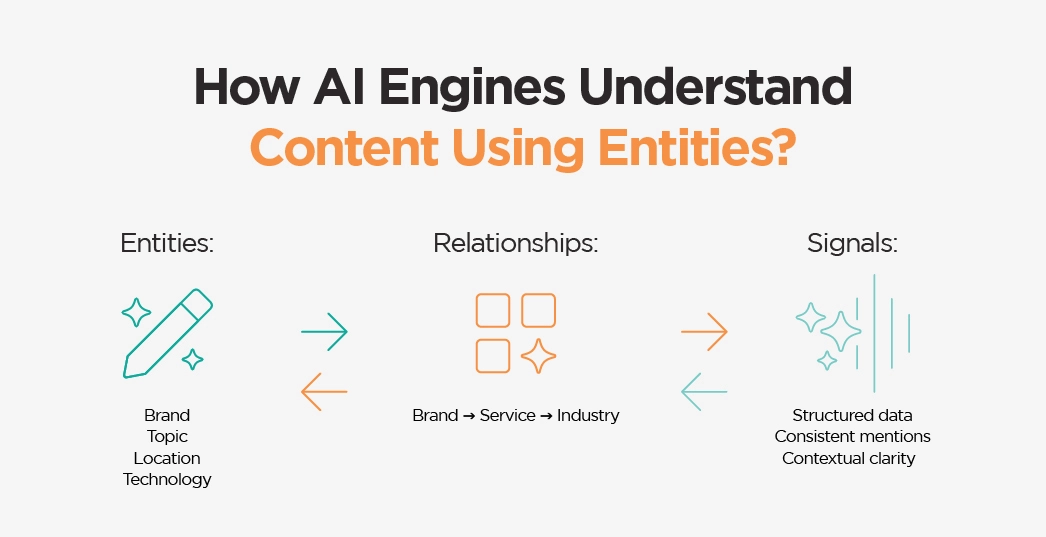
Entities are recognised concepts such as:
- Brands
- Topics
- Technologies
- Locations
- People
When content clearly connects related entities and explains their relationships, AI systems can understand and trust it more easily.
Key Changes in SEO Strategy for 2026
1. Entity Authority Matters More Than Keywords
Ranking is no longer just about matching search terms. AI search rewards brands that demonstrate topical authority across an entire subject.
This means:
- Creating in-depth pillar pages
- Supporting them with related cluster content
- Covering topics comprehensively, not superficially
2. Structured Content Wins AI Visibility
Content must be easy for machines to parse and summarise. High-performing pages use:
- Clear headings
- Short, direct paragraphs
- Lists and tables where relevant
- FAQs with precise answers
3. E-E-A-T Is Non-Negotiable
Experience, Expertise, Authoritativeness, and Trustworthiness play a major role in AI citation decisions.
AI engines look for:
- Real expertise
- Clear authorship or brand authority
- Consistent messaging
- Accurate, up-to-date information
4. Zero-Click Search Is the New Normal
Many users now get answers directly from search results, AI summaries, or voice responses without clicking through to a website. As a result, the objective is no longer just driving traffic, but earning visibility and influence at the answer level.
When a brand’s content is referenced or cited within AI-generated summaries, it reinforces authority and trust, even when traditional clicks are limited. This shift toward zero-click experiences is changing how success is measured in modern search, placing greater emphasis on clarity, credibility, and how information is surfaced.
How to Optimise Your Content for AI Search in 2026?
To remain competitive, businesses should:
- Write content that directly answers real user questions
- Use structured headings and FAQ sections
- Implement schema markup where appropriate
- Focus on clarity, not keyword stuffing
- Build topical depth across related subjects
- Maintain consistent brand and entity signals
SEO in 2026 is less about tricks and more about being genuinely useful.
The Business Impact of AI-Driven SEO
Brands that adapt early benefit from:
- Higher visibility in AI summaries
- Stronger brand authority
- Increased trust from users
- Long-term search resilience
Those who ignore AI search risk becoming invisible, even if they technically “rank” in traditional results.
Final Thoughts
AI search is not replacing SEO. It is evolving it.
In 2026, successful SEO strategies combine:
- Technical optimisation
- High-quality content
- AEO-ready structure
- GEO-focused authority building
Businesses that understand how AI engines think, evaluate, and summarise content will lead the next generation of search visibility. For teams planning to adapt their SEO strategy to AI-driven search, speaking with specialists who actively work with AEO and GEO frameworks can help clarify next steps and priorities.
Need a strong team specialised in SEO?
Speak to Verz today if you are looking to create a website with a
lasting impression to achieve online success.


 Share
Share